


DTW
Digital Twin Workspace
Connect space, racks, power, cooling, live sensing and simulation in one operational model so teams can compare scenarios before changing the facility.
The problem
High-density GPU racks, liquid cooling and redundant power are tightly coupled. Point temperatures and total power alone cannot explain the effects of added load, failover or cooling changes.
The outcome
Calibrate a twin with geometry, topology, boundary conditions and live data to support thermal, electrical and coupled scenario analysis.
Operational context
Compare scenarios in the twin before changing the facility.
DTW brings space, racks, cooling, power, sensing and models into one context for capacity, failure and efficiency decisions.
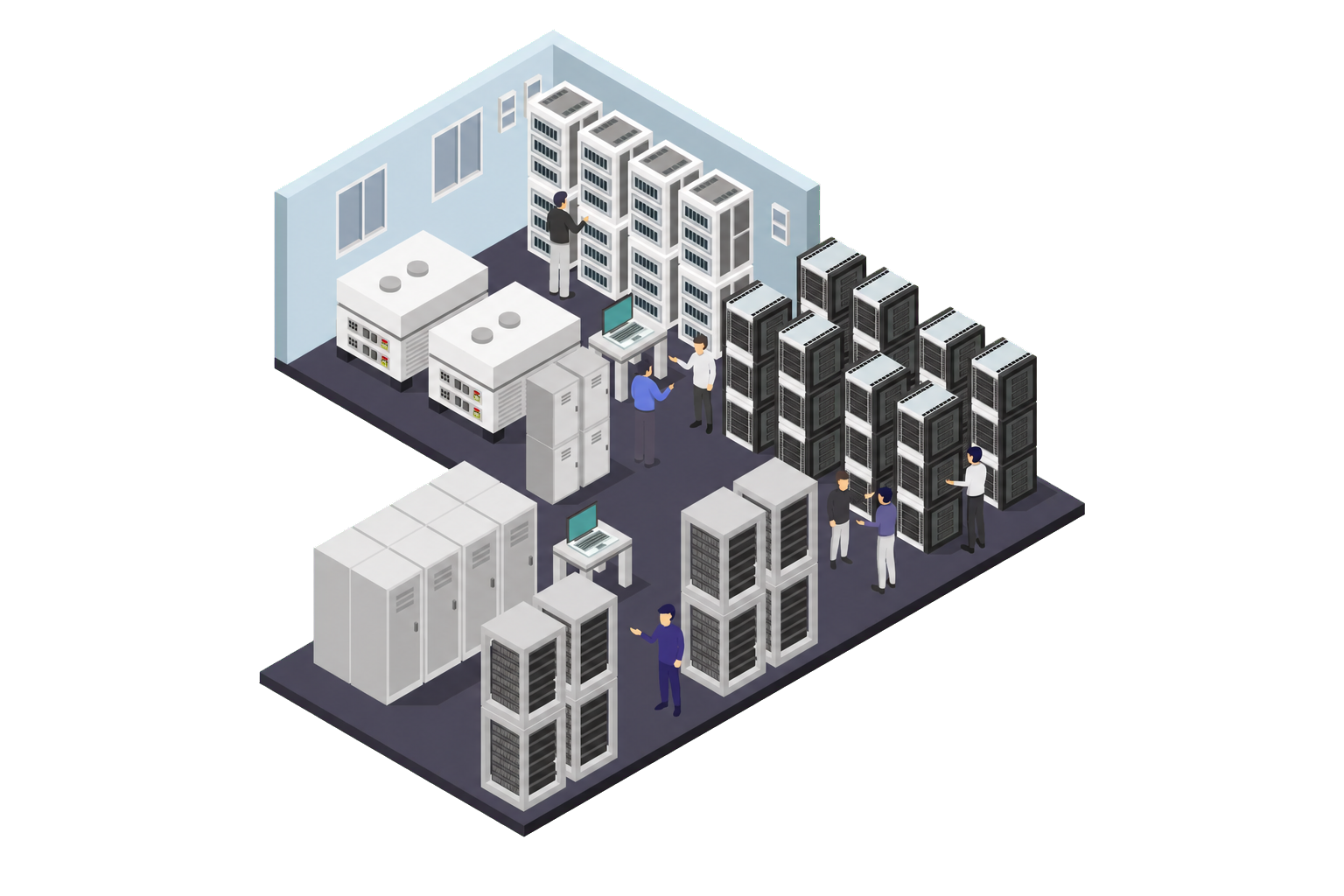
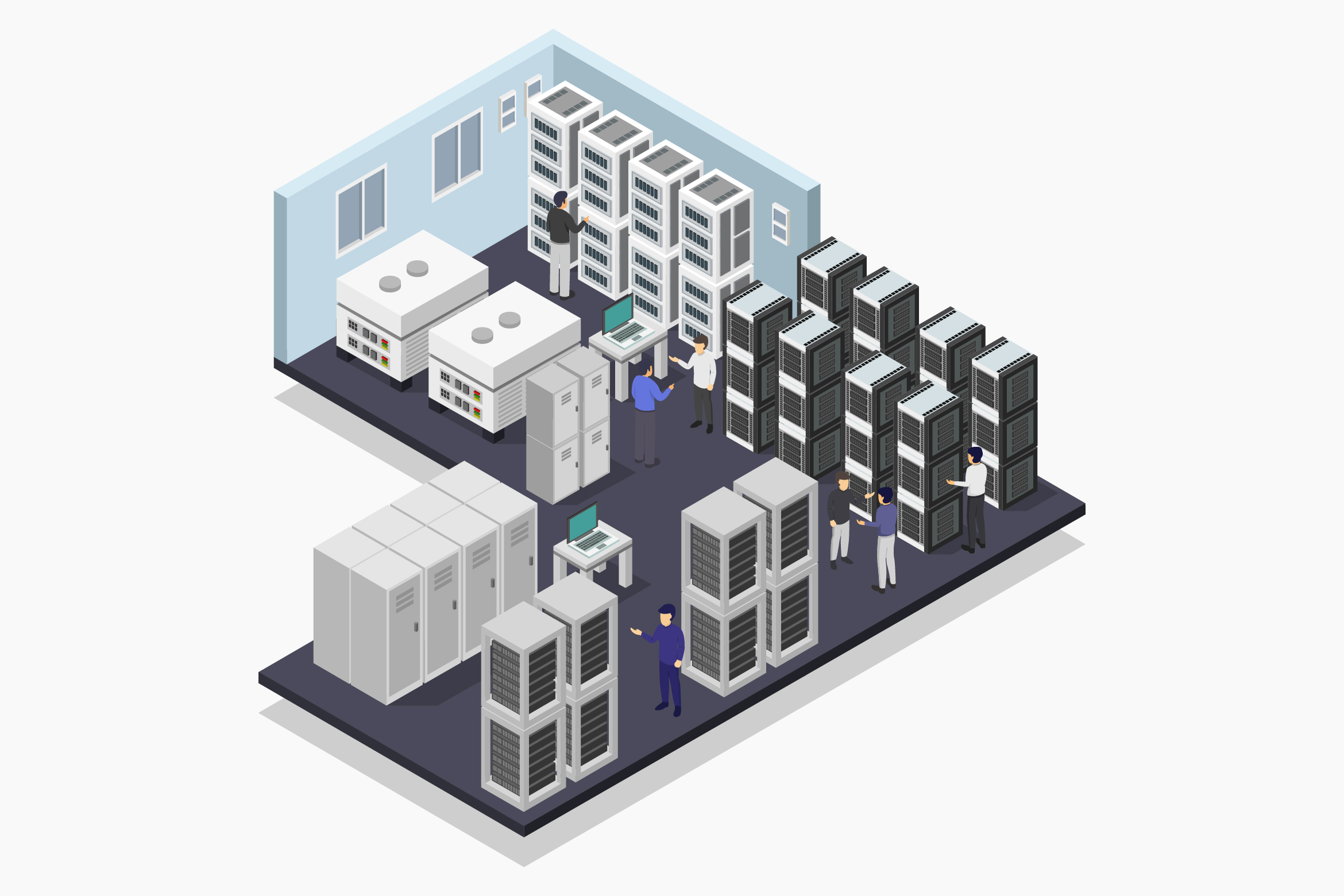
- 01Facility-space twinDescribe rooms, racks, hot and cold aisles, CRAC and CRAH units, vents, CDUs and sensor positions.
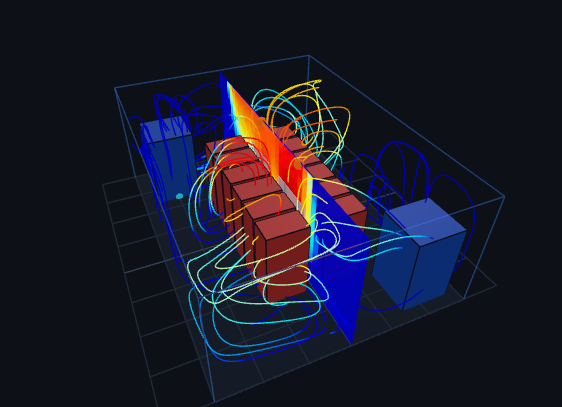
- 02Thermal and cooling scenariosUse an OpenFOAM workflow to assess hotspots, airflow short circuits, supply and return air, and cooling strategies.
- 03Electrical topology scenariosModel transformers, UPS, PDU, busways and A/B paths with pandapower to assess loading and failure scenarios.
Core capabilities
From product module to reusable operational capability.
DTW turns simulation, prediction and scenario comparison into traceable decision evidence. DTZ continuously brings real operating data—including temperature, humidity, power, flow, pressure differential and equipment state—into DTW so the twin can update decision state, recalibrate models and generate new forecasts as conditions change. Each result retains its data time, model version, inputs and assumptions. High-risk changes to power, cooling or equipment control still require engineering review and field validation.
Facility-space twin
Describe rooms, racks, hot and cold aisles, CRAC and CRAH units, vents, CDUs and sensor positions.
Thermal and cooling scenarios
Use an OpenFOAM workflow to assess hotspots, airflow short circuits, supply and return air, and cooling strategies.
Electrical topology scenarios
Model transformers, UPS, PDU, busways and A/B paths with pandapower to assess loading and failure scenarios.
Fast surrogate models
Accelerate repeated scenarios with PhysicsNeMo, PyTorch or ONNX models while recording model version and applicable range.
Operational-data calibration
Bring in temperature, humidity, power, flow, pressure differential and equipment state to compare predictions with actual outcomes.
High-density AIDC scenarios
Support GPU racks, high heat density, liquid-cooling CDUs, workload placement and joint cooling and power capacity decisions.
Data and responsibility flow
Every step stays visible, verifiable and governable.
- 01Build facility geometry, assets and electrical topology
- 02Import live measurements and boundary conditions
- 03Create baseline, change or failure scenarios
- 04Run thermal, electrical or coupled solvers
- 05Compare KPIs, risk and uncertainty before deciding
Use cases
Start with one high-value loop.
- Capacity assessment before GPU-cluster expansion
- Rack placement and workload allocation
- Cooling settings and hotspot mitigation
- A/B path and equipment-failure scenarios
- Hybrid liquid- and air-cooled facility planning
- PUE and energy-strategy comparison
Responsibility boundary
Keep every facility decision calibrated by live operational data.
Decision evidence update loop: DTW turns simulation, prediction and scenario comparison into traceable decision evidence. DTZ continuously brings real operating data—including temperature, humidity, power, flow, pressure differential and equipment state—into DTW so the twin can update decision state, recalibrate models and generate new forecasts as conditions change. Each result retains its data time, model version, inputs and assumptions. High-risk changes to power, cooling or equipment control still require engineering review and field validation.