Process and equipment context
Align tools, chambers, recipes, lots, carriers and time series so values retain operational meaning.


Unify equipment, process, recipe, environmental and quality context for precision operations.
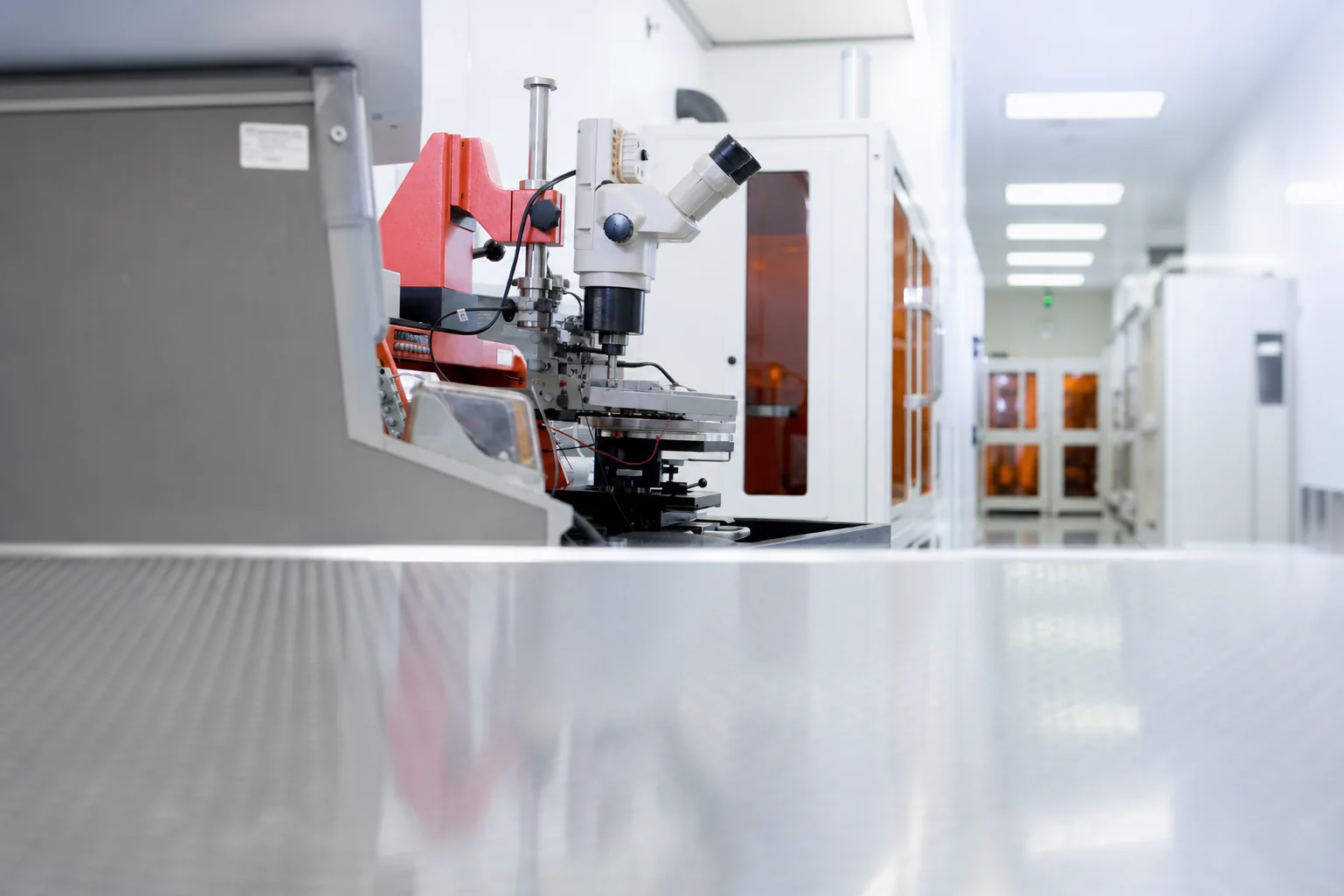

As process windows narrow and equipment density rises, one alarm or point value is no longer enough. Equipment state, recipe, lot, environment, maintenance and quality outcome must be understood together so anomaly investigation becomes contextual reasoning instead of a search through disconnected data.
Real digitalization leaves context that the next decision can use.
Align tools, chambers, recipes, lots, carriers and time series so values retain operational meaning.
Trace a quality event back through environment, consumables, maintenance and equipment state to identify the affected scope quickly.
Use governed naming, versions and data contracts for cross-site comparison while preserving real local differences.
Baselines and targets are defined together during discovery.
Define decisions, users, sources and baselines.
Build the first loop in a bounded environment.
Establish semantic, access and quality governance.
Scale proven patterns across sites.
We begin with constraints, existing systems and accountability boundaries.
Book a discovery session